
Life Isn't Fair: How Women Can Build a Stronger Money Mindset Anyway

by Liesel Darby, Mediator & Divorce Coach
Growing up, you probably heard the "F-word" at some point, and it wasn't "fudge." In this post, we're talking about a different F-word, one that can quietly undermine your financial empowerment and overall wellbeing: FAIRNESS.
For women navigating careers, money, relationships, and midlife transitions, the belief that things should be fair can be a surprisingly powerful obstacle. Here's what the research and real life experience tell us about why fairness thinking holds us back, and what to do instead.
Why "Life Isn't Fair" Is Actually Useful Wisdom for Women
The concept of fairness seems harmless enough. It has the ring of righteousness. When things go our way, fairness feels like justice. But that's precisely the problem: the expectation that things should be fair sets us up for indignation, resentment, and paralysis when life doesn't deliver.
At the extreme end, a rigid attachment to fairness can keep us stuck, waiting for the world to ...
Navigating Difficult Financial Conversations

Financial conversations can be tough to navigate in life. Whether it's discussing budgets with your spouse, talking to your children about spending habits, or helping aging parents handle their estate, these discussions require courage and tact. Managing these challenging financial conversations successfully is crucial, and it's understandable if you feel overwhelmed. Rest assured, you're not alone. Many people face similar situations and find it comforting to have guidance and support. If you're looking for help in navigating these conversations, know that there are resources available to assist you on your financial journey.
As a financial planner and mediator, I deeply understand the challenges that conversations about money can bring. We've gathered a few valuable tips along our journey that we'd love to share with you.
We're here to provide support and guidance as you navigate these important discussions. With our compassionate and empathetic approach, we aim to help you achieve...
Financial Tips for Changing Careers: What to Do With Your Money Before, During, and After

I have been through this more than once.
I have been unexpectedly laid off. I have made a deliberate decision to walk away from a career path that was no longer right for me. And I have built a business from scratch without a guarantee of what the first year would look like financially.
Each time, the thing that made the difference was not courage or optimism, though those help. It was preparation. Having a financial plan that gave me enough runway to make the leap without free-falling.
A career change is one of the most significant financial transitions a woman can make, especially in midlife when the stakes are real and the margin for error feels smaller. But it is absolutely navigable. Here is how I think about it.
Start With Clarity Before You Start With Job Boards
Before you update your resume or start researching new fields, get honest about where you stand financially right now.
This is the Clarity pillar of the Intentional Money Method. You cannot plan a transition withou...
How to Overcome Financial Setbacks Without Losing Your Wealth Mindset

Table of Contents
- The Setback Nobody Talks About
- Why Financial Setbacks Hit Women Differently
- What a Financial Setback Actually Looks Like (Real Examples)
- The Emotional Spiral: Why Your Mindset Takes the First Hit
- How to Start Over Financially Without Starting From Zero
- Rebuilding Financially: The Practical Steps That Actually Work
- What Financial Resilience Looks Like in Real Life
- The Role of Community in Recovering from a Financial Setback
- Frequently Asked Questions
The Setback Nobody Talks About
Here is something I have noticed in nearly two decades of working with women and their finances. The setback that derails people is rarely the one they saw coming.
It is the divorce they thought they could afford but could not. The job loss that happened eight months before retirement eligibility. The emergency fund that got used up for one emergency and then another before it could be rebuilt. The business that almost made it. The medical bill that showed up the same month...
What It Means to Watch Her Thrive: A Financial Empowerment Movement for Women

Table of Contents
- Where Watch Her Thrive Began
- How the Mission Evolved
- What It Really Means to Thrive
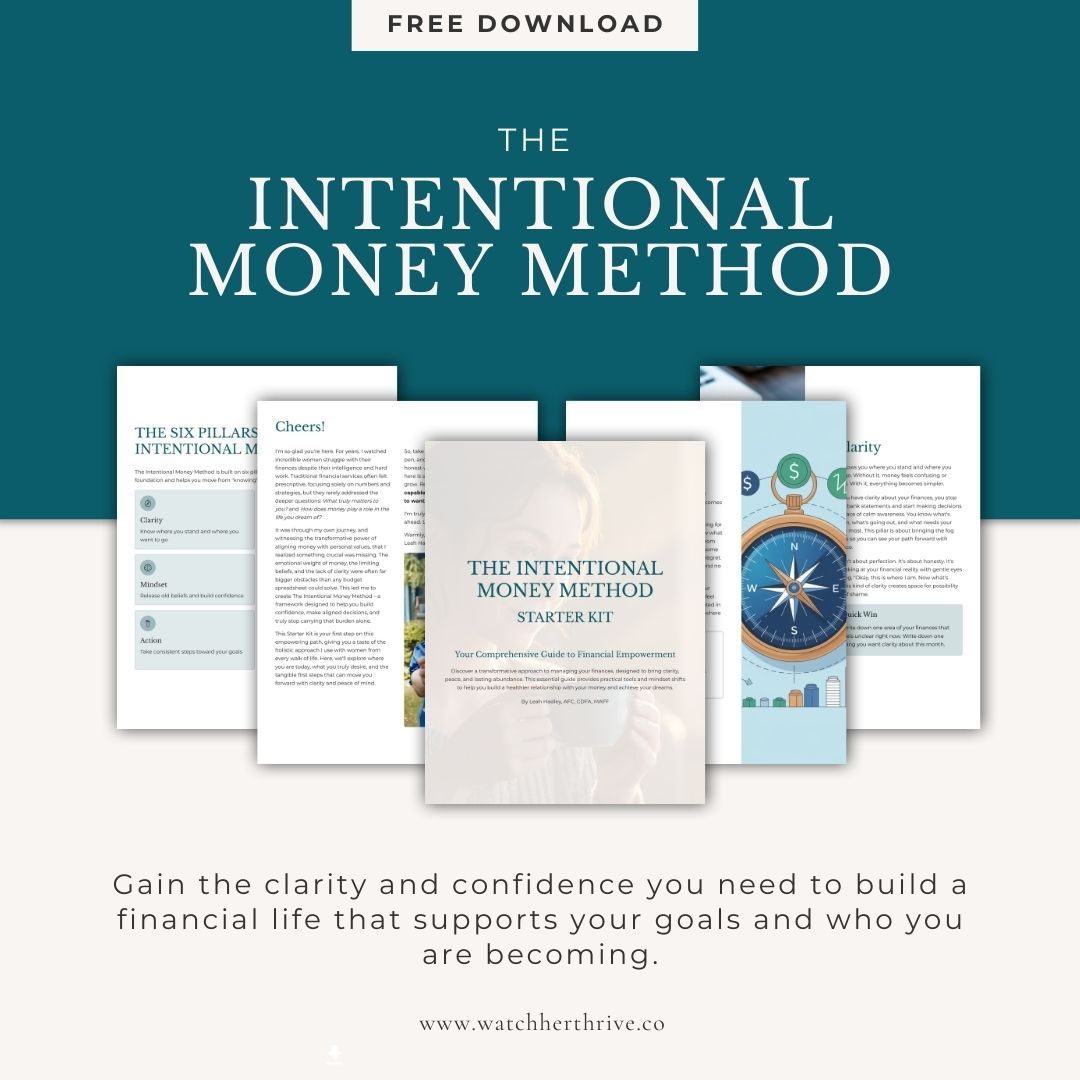
- The Intentional Money Method: A Framework for Financial Empowerment
- Who Watch Her Thrive Is For
- The Empowered Sisterhood: Community as a Wealth-Building Tool
- What You Will Find Here
- A Note on Loss, Reinvention, and Thriving Anyway
- Your Invitation to Thrive
Where Watch Her Thrive Began
If you have been here since the early days, you might remember when this community was called Moms Managing Money. If you do, I am raising a glass to you right now. Seriously. You were there at the beginning, and you matter more than you know.
Back then, I was a financial planner and former equity research analyst trying to build something that felt like a real resource for women managing household finances, navigating motherhood, and trying to figure out what "financial stability" even meant for them. The blog started as a collection of tips. It grew into a community. And then it outgr...
How to Spring Clean Your Finances: A Checklist for Women Ready for a Fresh Start

You scrub the baseboards. You donate three bags of clothes. You finally tackle that junk drawer. And then you sit down and feel genuinely good about your space.
But when was the last time you did that for your money?
Spring cleaning your finances is not just about tidying up numbers on a spreadsheet. It is about getting honest with where you are, getting clear on where you want to go, and building a system that actually works for your real life. Not someone else's. Yours.
I talk about this a lot in my book, Intentional Money: The Modern Woman's Guide to Building Wealth, Purpose and Peace. The very first pillar of what I call the Intentional Money Method is Clarity. Not perfection. Not having everything figured out. Just the willingness to look.
Spring is the perfect time to look. First quarter is done. Taxes are hopefully filed. And there are still nine months left in the year to make meaningful progress toward your goals.
So let's do this together. Here is your step-by-step sprin...
How to Find a Financial Accountability Partner (And Why It Changes Everything)

I have been working with women on their finances for nearly two decades, and one of the most consistent patterns I have seen is this: the women who make the most meaningful progress are almost never doing it alone.
Not because they are more disciplined. Not because they have more money to work with. But because they have someone in their corner. Someone who knows their goals, checks in on their progress, celebrates the wins, and tells them the truth when they are sliding off track.
That is what a real accountability partner does. And if you do not have one, finding one might be one of the most impactful financial decisions you make this year.
What a Financial Accountability Partner Actually Is
An accountability partner is not a cheerleader, though encouragement is part of it. And they are not a financial advisor, though they might help you think through decisions. A true accountability partner is someone who holds space for your goals, asks the hard questions, and shows up consiste...
Questions to Ask a Financial Advisor: Your Complete Meeting Checklist

Walking into a financial advisor meeting without knowing what to ask puts you at a disadvantage before the conversation even starts.
I have been on both sides of that table. As a financial planner, I have sat across from hundreds of women and guided them through the process of understanding their finances. And as someone who came up through the industry, I have seen what happens when advisors lead those conversations entirely on their own terms.
Here is what I want you to know: you are not there to be managed. You are there to be served. That means you should be asking as many questions as the advisor is.
This post gives you the complete checklist for every stage of the advisor relationship, from your very first meeting through your annual reviews. Print it. Save it. Bring it with you.
If you have not yet found an advisor and are still in the selection process, start with this guide on how to choose a financial advisor before you use this checklist.
Before Your Fir
...How to Choose a Financial Advisor: What Women in Midlife Need to Know

I have been a financial advisor for nearly two decades. I have worked inside large institutions and built my own firm. And I can tell you with complete honesty that not all financial advisors are created equal.
Some are excellent. Some are mediocre. And some are genuinely not working in your interest, even if they seem confident and credentialed.
I say that not to scare you away from getting professional help. Quite the opposite. A good financial advisor is one of the most valuable relationships you can have, especially in midlife when the decisions you make now have real consequences for the next 20 or 30 years. I say it because I want you to know what to look for, what questions to ask, and what should give you pause.
Here is how to choose a financial advisor who is actually right for you.

Start With Clarity on What You Actually Need
Before you talk to a single advisor, get clear on what you are looking for. This is the Clarity pillar of the Intentional...
Returning to Work After a Career Gap: What Women in Midlife Need to Know

Returning to work after time away from your career is one of the most significant financial transitions a woman can face. And it almost never happens in a vacuum.
Maybe you stepped back to raise children and are now re-entering after a divorce. Maybe your kids have launched and you are ready to rebuild professionally. Maybe a relationship ended and your financial independence is no longer optional. It is urgent.
Whatever brought you here, I want to start by saying something I mean: the time you spent away from traditional employment was not wasted. You built skills. You managed complexity. You made decisions under pressure with real consequences for real people. That counts. And in many ways, it has prepared you for exactly the kind of intentional, values-driven professional life that is possible on the other side of this transition.
The fear is real. So is the opportunity. Here is how to navigate both.
Start With Clarity Before You Start With Resumes
The instinct when returning t...

Leah Hadley, AFC, CDFA, MAFF
Leah Hadley, AFC® CDFA® MAFF™, is a bestselling author and financial planner with over 20 years of experience helping women build wealth with intention. She is the founder of Watch Her Thrive and Intentional Wealth Partners, and the author of Intentional Money: The Modern Woman's Guide to Building Wealth, Purpose & Peace.

Amazon Affiliate Disclosure
Watch Her Thrive is a participant in the Amazon Services LLC Associates Program, an affiliate advertising program designed to provide a means for sites to earn advertising fees by advertising and linking to amazon.com.
Investment Advisory Disclosure:
Leah Hadley is a Licensed Investment Adviser Representative and the Founder of Intentional Wealth Partners, a Registered Investment Adviser. Advisory services are offered exclusively through Intentional Wealth Partners.
Watch Her Thrive is not a Registered Investment Adviser and does not provide individualized investment advice, financial planning, or securities recommendations. All content provided through Watch Her Thrive is for educational and informational purposes only.