
Questions to Ask a Financial Advisor: Your Complete Meeting Checklist

Walking into a financial advisor meeting without knowing what to ask puts you at a disadvantage before the conversation even starts.
I have been on both sides of that table. As a financial planner, I have sat across from hundreds of women and guided them through the process of understanding their finances. And as someone who came up through the industry, I have seen what happens when advisors lead those conversations entirely on their own terms.
Here is what I want you to know: you are not there to be managed. You are there to be served. That means you should be asking as many questions as the advisor is.
This post gives you the complete checklist for every stage of the advisor relationship, from your very first meeting through your annual reviews. Print it. Save it. Bring it with you.
If you have not yet found an advisor and are still in the selection process, start with this guide on how to choose a financial advisor before you use this checklist.
Before Your First Meeting: What to Prepare
Before you walk in, spend a few minutes getting clear on what you actually want from this relationship. This is the Clarity pillar of the Intentional Money Method applied directly to your advisor search.
Ask yourself:
- What is my biggest financial concern right now?
- What do I want my financial life to look like in five years? In ten?
- What have I been avoiding or putting off that I need help with?
- What do I already have in place and what feels like it is missing?
You do not need perfect answers. You just need enough clarity to walk in with intention rather than anxiety.
Also bring a general sense of your income, your assets, your debts, and any accounts you currently have. You do not need everything organized perfectly. You just need to be able to have a real conversation.
First Meeting Checklist: Questions to Ask
The first meeting is as much about evaluating the advisor as it is about sharing your situation. A good advisor will expect you to ask hard questions. Someone who gets defensive when you do is telling you something important.
About their background and approach:
- Why did you become a financial advisor?
- How long have you been in practice?
- What credentials do you hold, and what do they mean in practice?
- What types of clients do you typically work with? Do you specialize in any particular life stage or situation?
- What is your investment philosophy?
- How do you approach financial planning beyond investments? Do you look at the full picture?
About how they work:
- Are you a fiduciary at all times? (This one matters. Some advisors are fiduciaries in some contexts but not others. You want someone who is legally required to act in your best interest all the time.)
- How are you compensated? Do you earn commissions on any products you recommend?
- What does your planning process look like from start to finish?
- Will I have a written financial plan? How often will it be reviewed and updated?
- How do you typically communicate with clients? How often will we meet?
- Who else on your team would I be working with?
About fit:
- Can I see a sample financial plan so I understand what the output looks like?
- What happens to my accounts and our relationship if something happens to you?
- What does success look like in your client relationships?
Pay attention to how they answer, not just what they say. Do they listen before they talk? Do they ask about your life, not just your numbers? Do you feel like a person or a portfolio?
A true money partnership is built on trust and mutual respect. If you do not feel that in the first conversation, keep looking.
What to Look for in Their Answers
A few specifics worth highlighting.
On fiduciary: The answer should be a clear yes. If it is hedged or complicated, ask again. You want an advisor who is held to the fiduciary standard at all times, not just when they feel like it.
On compensation: Fee-only means they charge you directly and do not earn commissions. Fee-based means they charge fees but may also earn commissions. Commission-based means they are paid when they sell you products. None of these automatically makes someone a bad advisor, but you deserve to know exactly how they are incentivized.
On credentials: Ask what each credential actually means. An AFC has significant training in behavioral finance and budgeting. A CDFA specializes in divorce financial analysis. A CFP has broad financial planning training. A CFA has deep investment expertise. Make sure their training matches what you actually need.
Annual Review Checklist: Questions for Every Year
Once you have found the right advisor, regular reviews are how the relationship stays aligned with your actual life. I recommend at minimum one formal review per year, and more frequently if significant things are changing.
Before your annual review, think through the past year. What has changed? What questions have been sitting in the back of your mind?
Life changes to flag with your advisor:
- Job changes, promotions, or income shifts
- Marriage, divorce, or separation
- Death of a spouse or beneficiary
- Major health changes
- Children launching, returning home, or needing financial support
- Inheritance or other significant financial events
- Changes in housing
Questions to ask at every annual review:
- How did my investments perform relative to my plan and goals?
- How did my portfolio perform relative to the broader market?
- Do we need to make any changes to my investment strategy?
- Are my contributions still aligned with my goals?
- Do my beneficiary designations need to be updated?
- Is there anything missing from my financial plan based on where I am now?
- What adjustments have you made to my portfolio this year and why?
- What do you recommend going forward?
- Are there any tax considerations I should be aware of heading into the next year?
- Are we still on track for my retirement timeline and goals?
The annual review is also a good time to evaluate the relationship itself. Do you still feel heard? Is the plan evolving as your life does? Do you trust this person? If the answer to any of those is wavering, that is worth paying attention to. You have every right to change advisors if the relationship is no longer serving you.
What Good Ongoing Communication Looks Like
Your advisor should not be a once-a-year relationship. You should feel comfortable reaching out when something significant changes or when a question comes up between meetings. If you feel like you are bothering them or that your questions are not welcome, that is a problem.
The best advisor relationships feel like a genuine partnership. Your advisor knows your goals, understands your values, and gives you advice that is connected to your actual life. Not a generic strategy handed to everyone with a similar balance sheet.
That is what intentional financial planning looks like. And it starts with you walking in prepared and knowing what to ask.
Work With an Advisor Who Specializes in Women in Midlife
If you are looking for a financial advisor who specializes in working with women through midlife transitions, divorce, and building long-term wealth, that is exactly what we do at Intentional Wealth Partners. I would love to talk.
And if you want to build your overall financial confidence alongside a community of women who are doing the same work, the Empowered Sisterhood is where that happens. Come join us.
Keep Reading
How to Choose a Financial Advisor: What Women in Midlife Need to Know The full guide to finding the right advisor before you use this checklist.
Building a True Money Partnership What a healthy relationship with your financial team actually looks like.
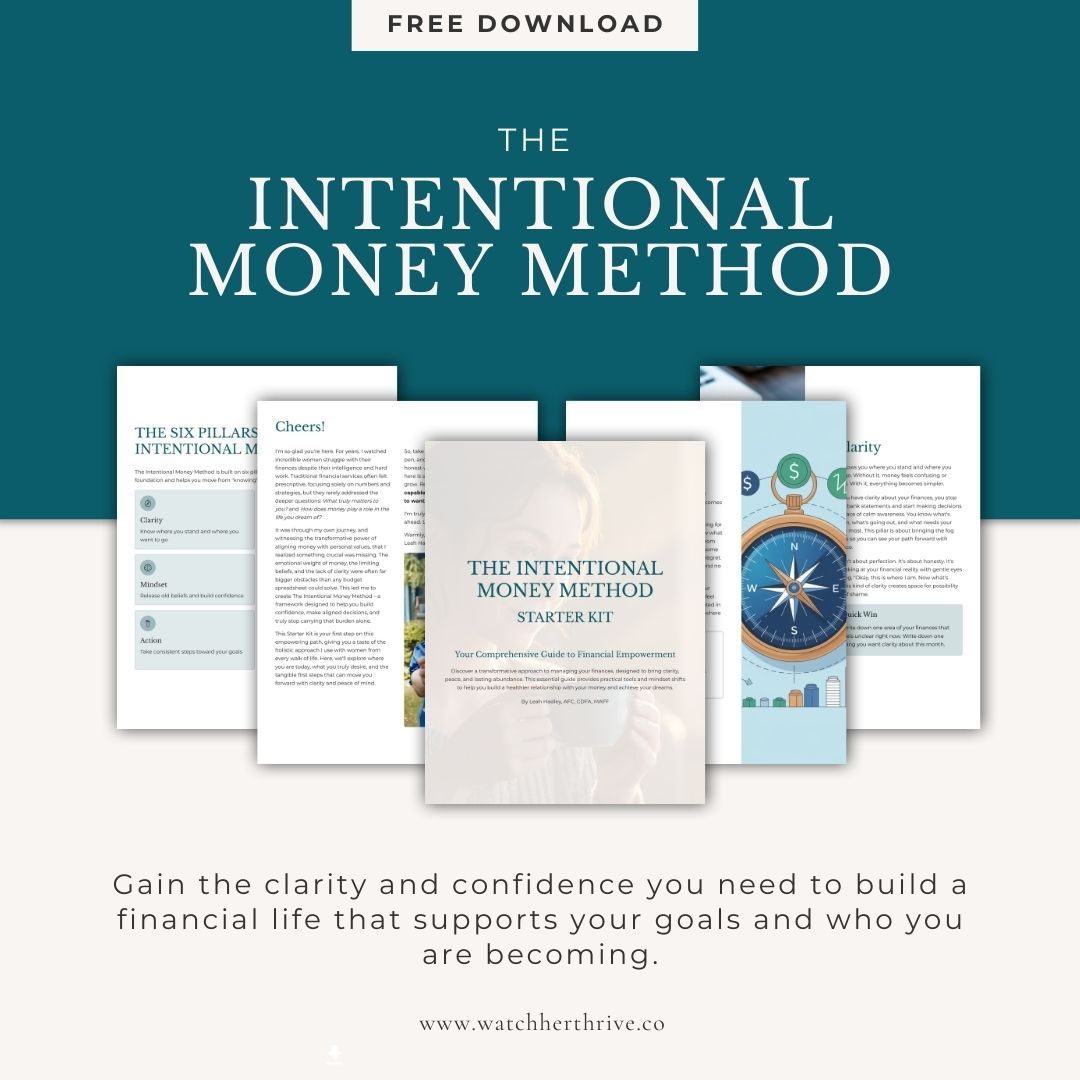
The Intentional Money Method The values-based framework I use to help women make financial decisions that feel like theirs.
5 Smart Ways to Become a Better Investor Whether you are working with an advisor or on your own, these fundamentals apply.
Free: Intentional Investing for Women
My 24 page guide to aligning your portfolio with your goals. If investing has always felt like a language other people speak, start here.

Leah Hadley, AFC, CDFA, MAFF
Leah Hadley, AFC® CDFA® MAFF™, is a bestselling author and financial planner with over 20 years of experience helping women build wealth with intention. She is the founder of Watch Her Thrive and Intentional Wealth Partners, and the author of Intentional Money: The Modern Woman's Guide to Building Wealth, Purpose & Peace.

Amazon Affiliate Disclosure
Watch Her Thrive is a participant in the Amazon Services LLC Associates Program, an affiliate advertising program designed to provide a means for sites to earn advertising fees by advertising and linking to amazon.com.
Investment Advisory Disclosure:
Leah Hadley is a Licensed Investment Adviser Representative and the Founder of Intentional Wealth Partners, a Registered Investment Adviser. Advisory services are offered exclusively through Intentional Wealth Partners.
Watch Her Thrive is not a Registered Investment Adviser and does not provide individualized investment advice, financial planning, or securities recommendations. All content provided through Watch Her Thrive is for educational and informational purposes only.