
How to Align Your Money With Your Values (Your Time and Energy Too)

Let me ask you something. If a stranger looked at your bank statement and your calendar from last month, what would they say you care about?
For a lot of women, the answer stings a little. Nothing is wrong, exactly. What they value and where their money, time, and energy actually go have just drifted apart without anyone deciding it.
Aligning your money with your values means making sure your spending, saving, giving, and investing reflect what matters most to you, not what you think should matter or what everyone around you is doing. It's the Values pillar of the Intentional Money Method, and it's where every other money decision gets its direction.
Why your money and your values drift apart
Nobody sets out to spend money on things they don't care about. Drift happens because most financial decisions aren't really decisions. They're defaults. The subscription that renewed. The house that fit the life you had five years ago. The dinner out that started as a treat and quietly became...
How to Keep The Winds of Change from Blowing You Off Course

by Liesel Darby, Mediator & Divorce Coach
What do the following have in common?
- You’re in the grocery store, looking for your favorite brand of stone-ground mustard, only to find that they no longer carry it. The replacement brand is twice the price, and you don’t like the packaging either.
- You’re accustomed to your second shift schedule, but you have just been informed that you are moving to first shift for the foreseeable future. This throws a wrench in your Pilates class schedule.
- Your spouse has just announced that he is leaving you for the neighbor down the street that you have been casually saying hi to on your evening walks if she’s out in the yard.
If you answered “things that make you go hmmmm,” you are partly correct. Actually, these are all examples of change, albeit in varying degrees of the impact it will have on a person’s life. New mustard brand versus your world being turned upside down by divorce are not on the same par, for sure. If you’ve been around in this...
How to Financially Prepare Your College-Bound Young Adult (Before They Leave Home)

If you have a college-bound young adult at home right now, I want to talk to you about something that probably isn't on your back-to-school checklist. It might matter more than the extra-long twin sheets.
Money.
Specifically: how to have an actual conversation about it before they walk out the door.
As a financial planner who has worked with women through some of the biggest money moments of their lives, I can tell you that the habits formed in those first years of independence tend to stick. The good ones and the not-so-good ones. And while you can't control every choice your kid makes once they're on campus, you absolutely can set them up with a foundation that will serve them for decades.
Here's how.
Start With Clarity: Know What You're Each Responsible For
The first pillar of my Intentional Money Method is Clarity, and it applies beautifully here. Before any conversation about budgets or credit cards can go well, you and your young adult need to be crystal clear about the bas...
Budgeting for Women Over 50: Path to Financial Freedom

Do you ever feel like your money disappears without warning—or find yourself so afraid to spend that you can’t fully enjoy life?
If so, you’re not alone. Many women in midlife, especially after a major life change like divorce or retirement, struggle to find the right balance between saving and living.
The good news is that there’s a solution: creating a personalized budget plan.
A personalized budget isn’t about restriction—it’s about clarity, confidence, and control. It helps you understand your income, expenses, and priorities so your money supports the life you want to live.

Why a Budget Plan Is Your Financial Roadmap
Think of your budget as your personal roadmap to financial freedom.
It shows where your money is coming from, where it’s going, and how to use it in alignment with your goals.
Instead of feeling deprived, you’ll feel empowered to make intentional financial choices that reflect your values.
Let’s take a look at how one woman transformed her relationship with money thr...
Busting 3 Myths about Women & Money

Have you ever been told that you're not good with money? That women aren't as financially savvy as men? That we're more prone to overspending and living beyond our means? Unfortunately, these kinds of stories are all too common. But the truth is, they're just myths.
I’m going to bust some of the most pervasive myths about women and money, and share some truths that will help you take control of your finances.
Myth #1: Women are naturally bad with money.
There's no biological or genetic reason why women would be less skilled at managing finances than men. Studies have shown that women tend to be more diligent about budgeting and saving than men, and are less likely to take on risky investments.
A report published in 2018 by the Warwick Business School in the UK analyzed data from 2,800 investors over a three-year period and found that women generated higher returns on their investments than men. The report attributed this trend to the fact that women tend to be more patient and less li...
How to Overcome Financial Setbacks Without Losing Your Wealth Mindset

Table of Contents
- The Setback Nobody Talks About
- Why Financial Setbacks Hit Women Differently
- What a Financial Setback Actually Looks Like (Real Examples)
- The Emotional Spiral: Why Your Mindset Takes the First Hit
- How to Start Over Financially Without Starting From Zero
- Rebuilding Financially: The Practical Steps That Actually Work
- What Financial Resilience Looks Like in Real Life
- The Role of Community in Recovering from a Financial Setback
- Frequently Asked Questions
The Setback Nobody Talks About
Here is something I have noticed in nearly two decades of working with women and their finances. The setback that derails people is rarely the one they saw coming.
It is the divorce they thought they could afford but could not. The job loss that happened eight months before retirement eligibility. The emergency fund that got used up for one emergency and then another before it could be rebuilt. The business that almost made it. The medical bill that showed up the same month...
15 Best Budget Apps & Money Management Tools

Looking for the best budget app or money management tool? There are so many facets of budgeting, and you'll likely have to make some sacrifices, but using one of these tools can make those sacrifices easier and can take the most challenging work out of budget. These are the best budgeting apps and tools to download now if you want to get your spending under control.
What is a budgeting app?
A budgeting app is a digital tool that helps you track and manage your income, expenses, and savings. It allows you to create and stick to a budget by categorizing your expenses, setting limits, and providing insights into your spending habits. With the rise of technology, budgeting apps have become increasingly popular as they make it easier than ever to stay on top of your finances.
Why use a budgeting app?
There are many benefits to using a budgeting app. For starters, it can save you time and effort by automatically tracking your transactions and organizing them into categories. This elimi...
6 Budgeting Myths to Stop Believing (and the Truths Instead!)

Having a budget is essential to successful financial planning, and over the years I have heard so many myths about budgets and why people say they don’t work or why they don’t need a budget. These budgeting myths can prevent you from achieving financial security so in this blog post, let’s play MythBusters and walk through some of the misinformation I hear about budgets and what the truths are instead.
Budget Myth #1: Creating and managing a budget takes too much time.
The Reality: Taking control of your money is worth the investment.
Creating a budget for the first time can seem overwhelming and time consuming, but it doesn’t have to be. There are so many tools, templates and apps available to help you through the process. And once your budgeting framework is in place, you can easily and quickly adjust your budget.
If you use an app or other online money management tool for your budget, the tool walks you through the set-up process. You often link your financial accounts, answer...
Financial Freedom for Women: The Real Skills That Actually Move the Needle

Financial freedom isn't a fantasy. It's a plan.
And for women, having that plan matters more than ever. We're navigating a world where the gender pay gap is real, where we're more likely to step back from careers to care for others, and where financial advice has historically been written for someone who doesn't look like us.
That changes when you decide it does.
Here's what you actually need to know to build financial independence, step by step.
Start With Financial Literacy (Not the Boring Kind)
Financial literacy just means understanding how money works. Budgeting, saving, investing, managing debt. It's not complicated. It's just not talked about enough in the right rooms.
When women get clear on the basics, everything changes. You stop making decisions from fear or guesswork and start making them from knowledge. That shift is everything.
Start here:
Build a budget that's honest. A good budget isn't about restriction. It's about telling your money where to go before someon
...Use these 5 Steps to Give Your Budget a Check-Up

Give Your Budget a Check-Up
We’re in the full swing of Summer, and whether you’re in vacation mode or you’re working just as hard as ever, July is a great time to review your budget. After all, if you created it in January, a lot can change in 7 months, and you want to make adjustments now if you need to. Budgets are fluid documents that are meant to be changed and updated as needed to make sure your money is always working for you.
You don’t need to spend hours and hours pouring over every detail of your budget, but I do suggest taking the five steps listed below to make sure you’re on track to reaching your goals by the end of the year.
Review & update your budget
If you created your budget at the beginning of the year, now is the time to make sure that it’s still working for you. Are you staying within your budget, or are there some categories that need to be adjusted? With the increases we’ve seen in food and gas prices, many of our clients are finding ways to reduce spending ...
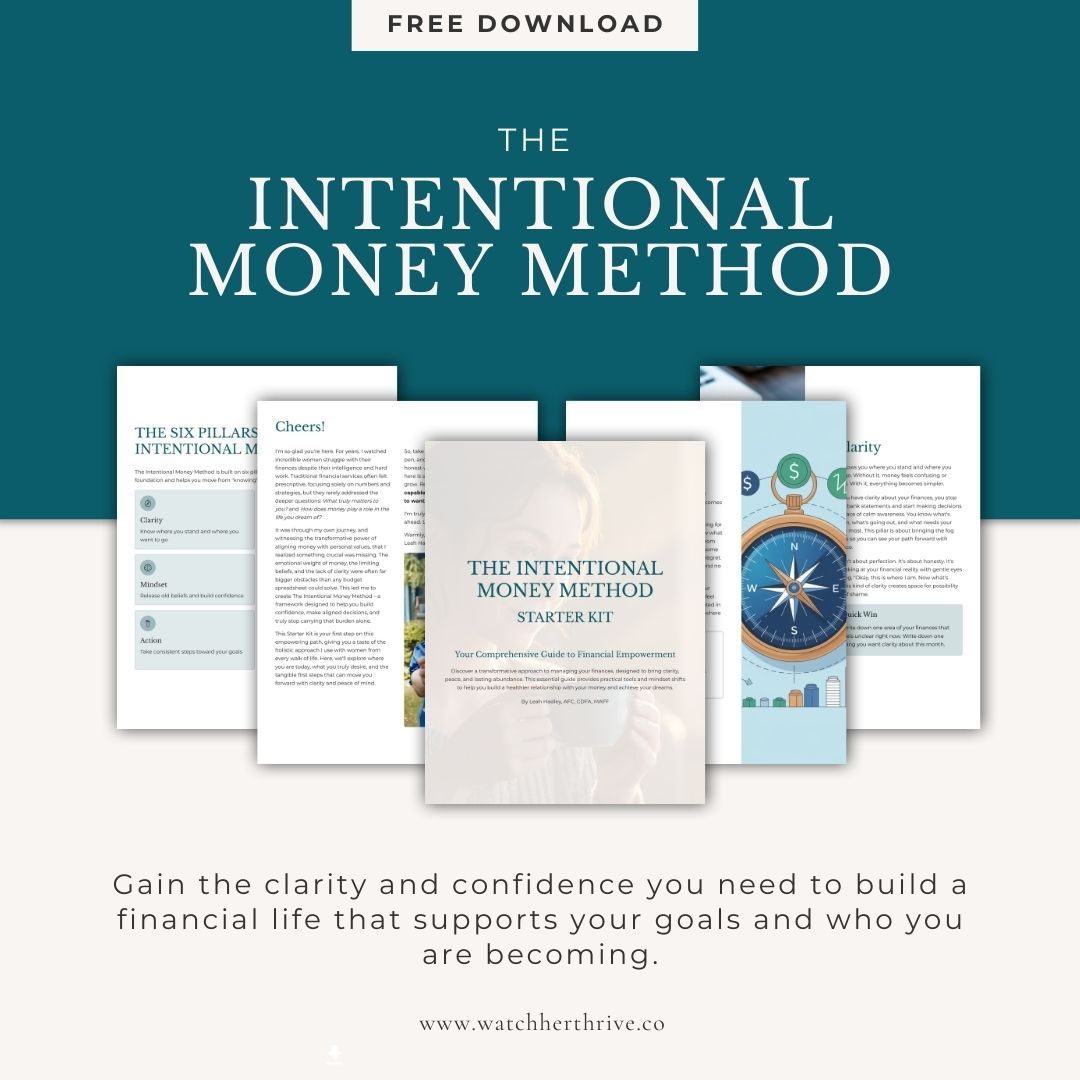
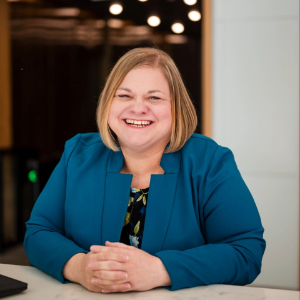
Leah Hadley, AFC, CDFA, MAFF
Leah Hadley, AFC® CDFA® MAFF™, is a bestselling author and financial planner with over 20 years of experience helping women build wealth with intention. She is the founder of Watch Her Thrive and Intentional Wealth Partners, and the author of Intentional Money: The Modern Woman's Guide to Building Wealth, Purpose & Peace.

Amazon Affiliate Disclosure
Watch Her Thrive is a participant in the Amazon Services LLC Associates Program, an affiliate advertising program designed to provide a means for sites to earn advertising fees by advertising and linking to amazon.com.
Investment Advisory Disclosure:
Leah Hadley is a Licensed Investment Adviser Representative and the Founder of Intentional Wealth Partners, a Registered Investment Adviser. Advisory services are offered exclusively through Intentional Wealth Partners.
Watch Her Thrive is not a Registered Investment Adviser and does not provide individualized investment advice, financial planning, or securities recommendations. All content provided through Watch Her Thrive is for educational and informational purposes only.