
Returning to Work After a Career Gap: What Women in Midlife Need to Know

Returning to work after time away from your career is one of the most significant financial transitions a woman can face. And it almost never happens in a vacuum.
Maybe you stepped back to raise children and are now re-entering after a divorce. Maybe your kids have launched and you are ready to rebuild professionally. Maybe a relationship ended and your financial independence is no longer optional. It is urgent.
Whatever brought you here, I want to start by saying something I mean: the time you spent away from traditional employment was not wasted. You built skills. You managed complexity. You made decisions under pressure with real consequences for real people. That counts. And in many ways, it has prepared you for exactly the kind of intentional, values-driven professional life that is possible on the other side of this transition.
The fear is real. So is the opportunity. Here is how to navigate both.
Start With Clarity Before You Start With Resumes
The instinct when returning to work is to jump straight to job boards and LinkedIn updates. I understand the urgency, especially if you are facing financial pressure. But the most important first step is actually internal.
Before you start applying, get clear on what you need, what you want, and what you are willing to do. This is the Clarity pillar of the Intentional Money Method, and it applies here just as much as it does to budgets and investment decisions.
Ask yourself:
- What do I actually need to earn to cover my essential expenses right now?
- What kind of work aligns with my values and the life I want to build?
- Am I returning to my previous field or is this a pivot?
- Do I need to rebuild credentials or skills before I can compete effectively?
- What does my ideal schedule look like, and is that realistic in my field?
Getting honest with these questions will help you make decisions from intention rather than panic.
If you are navigating this after a divorce, understanding your full financial picture first is essential before making major career decisions. Your income needs, your asset situation, and your timeline all affect what kind of position makes sense for you right now.
Take an Honest Inventory of Your Skills
Women returning to work after a career gap consistently undervalue what they bring. Do not do that.
Make a list of everything you have done in the time you were away from traditional employment. Managed a household budget. Navigated complex logistics. Volunteered. Freelanced. Cared for aging parents or children with complex needs. Led a committee. Managed vendors and service providers. Advocated for your family in difficult situations.
These are real competencies. They translate. The work is in articulating them in language that employers and clients recognize.
Also assess where genuine gaps exist. Has technology in your field moved significantly? Are there certifications or tools you would benefit from updating? Knowing where you are strong and where you need to invest time is more valuable than a vague sense of being behind.
Build Your Financial Foundation Before Your First Paycheck
One of the most common mistakes I see women make when returning to work is spending their first few paychecks before they have a plan for them.
Before you start earning, build your financial roadmap. What does your budget look like now? What are your immediate priorities: paying down debt, rebuilding savings, funding retirement contributions that lapsed? What does your financial picture need to look like in six months, one year, three years?
When you have a plan, your income has somewhere to go. Without one, even a significant salary can feel like it disappears. This post on creating a budget that actually works is a good place to start if you are building from scratch.
If you have been out of the workforce for a significant period, pay special attention to your retirement accounts. The years you were not contributing are years you cannot get back. Your first priority after covering essentials should be getting those contributions restarted, even at a modest level. This spring clean checklist has a dedicated step on retirement accounts worth reading.
Know What You Are Worth Before You Negotiate
After a career gap, there is a real temptation to accept whatever is offered out of gratitude or insecurity. Resist that.
Do your research on current market rates for your role, your experience level, and your geographic area. Sites like Glassdoor, LinkedIn Salary, and the Bureau of Labor Statistics are good starting points. Talk to people in your field. Understand what the range is before you walk into any conversation about compensation.
Then negotiate. Every time. A starting salary that is too low compounds for years, affecting every raise, every bonus, and every retirement contribution that builds on that base. This guide on how to negotiate a starting salary walks through exactly how to do it.
You have been out of the paid workforce. That does not mean you are worth less. In many cases it means you have perspective, emotional intelligence, and life experience that makes you a more capable professional than you were when you left.
Address the Practical Logistics Honestly
There are real practical considerations when returning to work, and pretending they do not exist does not help anyone.
Childcare if you still have kids at home, transportation, wardrobe, the adjustment period as your household routine shifts. These are real costs and real adjustments. Build them into your planning.
If you have flexibility in how you return, starting part-time or in a contract role can be a good way to rebuild professional momentum without immediately jumping into a full-time schedule. It also gives you time to assess whether the role or organization is genuinely a fit before you are fully committed.
If full-time is necessary for financial reasons, know that the adjustment period is real and temporary. Most women I work with who have navigated this transition describe the first three months as the hardest, and then a significant settling that happens once the new routine becomes normal.

Build Your Support System on Purpose
You cannot do this alone, and you should not try. The women who navigate major career transitions most successfully are almost always the ones who are connected, not isolated.
That support can come from many places. A trusted friend who has been through something similar. A therapist or coach who can help you process the emotional weight of the transition. A professional network you actively invest in rebuilding. A community of women who are navigating similar territory.
The Empowered Sisterhood is exactly that kind of community. Women in midlife who are doing the real work of rebuilding financial confidence, career identity, and their sense of what is possible. Come join us.
This Is a Beginning, Not a Catch-Up
Returning to work after time away is not about making up for lost time. It is not about proving something or competing with a younger version of yourself. It is about building the next chapter of your financial and professional life with intention.
You know things now that you did not know before. You have clarity about what actually matters. You have navigated hard things and come out the other side. That is not a liability. It is an asset.
The Intentional Money Method is built on the idea that your best financial decisions come from clarity about your values, not from fear or comparison. That is as true in your career as it is in your portfolio.
Start from where you are. Be honest about what you need. Build intentionally. That is enough.
Keep Reading
How to Negotiate a Higher Starting Salary How to walk into the compensation conversation prepared and confident.
How to Ask for a Raise When You're Underpaid Once you are back in the workforce, here is how to advocate for yourself over time.
How to Thrive After Divorce: Your Financial and Emotional Resource Guide If a major life transition brought you here, this is the broader resource guide.
How to Overcome Financial Setbacks Without Losing Your Wealth Mindset For the women who are rebuilding after something hard. This one is for you.
Financial Freedom for Women: The Real Skills That Actually Move the Needle Building lasting financial independence step by step.
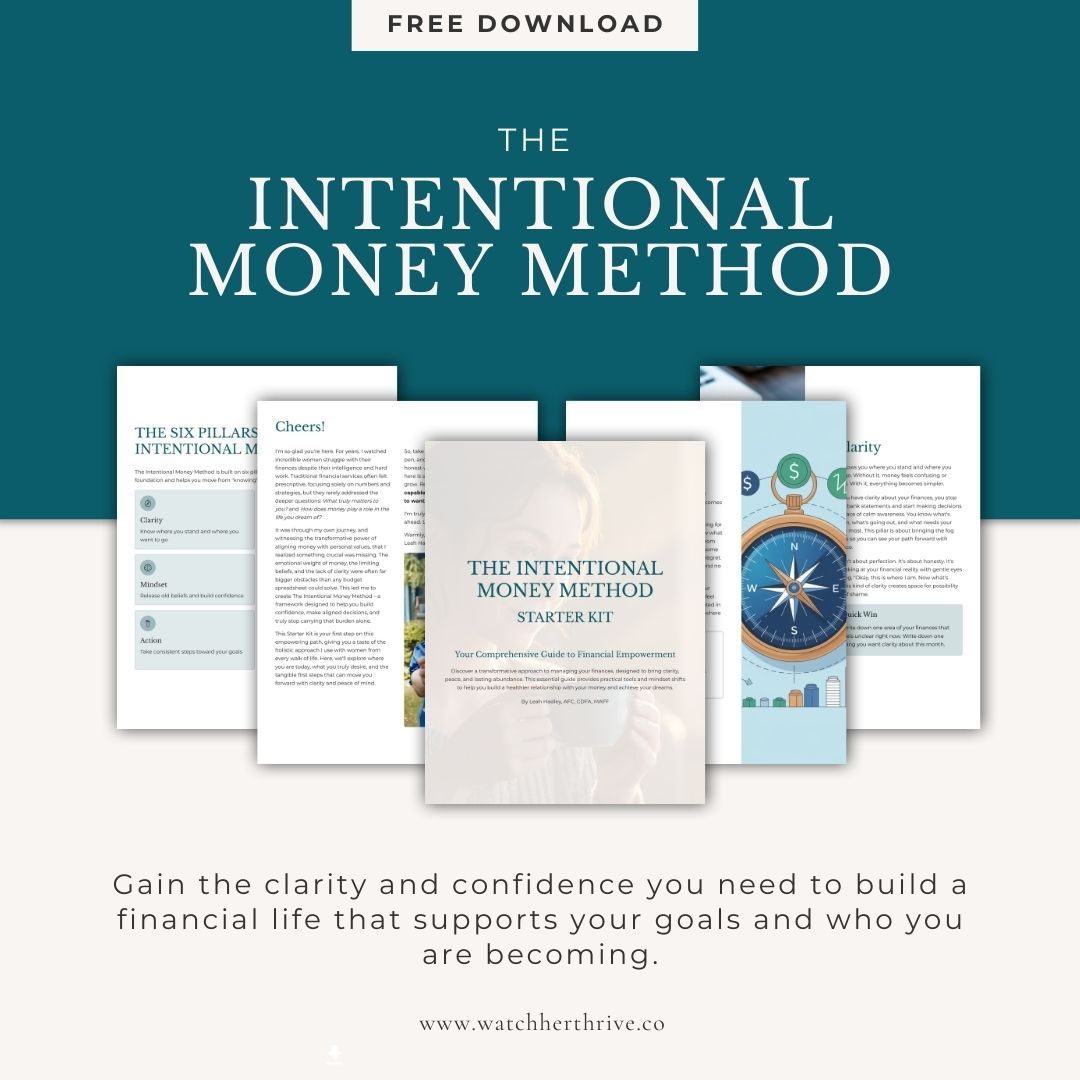
The Intentional Money Method The values-based framework behind every financial decision I help women make.
Free: Intentional Investing for Women
My 24 page guide to aligning your portfolio with your goals. If investing has always felt like a language other people speak, start here.

Leah Hadley, AFC, CDFA, MAFF
Leah Hadley, AFC® CDFA® MAFF™, is a bestselling author and financial planner with over 20 years of experience helping women build wealth with intention. She is the founder of Watch Her Thrive and Intentional Wealth Partners, and the author of Intentional Money: The Modern Woman's Guide to Building Wealth, Purpose & Peace.

Amazon Affiliate Disclosure
Watch Her Thrive is a participant in the Amazon Services LLC Associates Program, an affiliate advertising program designed to provide a means for sites to earn advertising fees by advertising and linking to amazon.com.
Investment Advisory Disclosure:
Leah Hadley is a Licensed Investment Adviser Representative and the Founder of Intentional Wealth Partners, a Registered Investment Adviser. Advisory services are offered exclusively through Intentional Wealth Partners.
Watch Her Thrive is not a Registered Investment Adviser and does not provide individualized investment advice, financial planning, or securities recommendations. All content provided through Watch Her Thrive is for educational and informational purposes only.