
Financial Freedom for Women: The Real Skills That Actually Move the Needle

Financial freedom isn't a fantasy. It's a plan.
And for women, having that plan matters more than ever. We're navigating a world where the gender pay gap is real, where we're more likely to step back from careers to care for others, and where financial advice has historically been written for someone who doesn't look like us.
That changes when you decide it does.
Here's what you actually need to know to build financial independence, step by step.
Start With Financial Literacy (Not the Boring Kind)
Financial literacy just means understanding how money works. Budgeting, saving, investing, managing debt. It's not complicated. It's just not talked about enough in the right rooms.
When women get clear on the basics, everything changes. You stop making decisions from fear or guesswork and start making them from knowledge. That shift is everything.
Start here:
Build a budget that's honest. A good budget isn't about restriction. It's about telling your money where to go before someon
...What It Means to Watch Her Thrive: A Financial Empowerment Movement for Women

Table of Contents
- Where Watch Her Thrive Began
- How the Mission Evolved
- What It Really Means to Thrive
- The Intentional Money Method: A Framework for Financial Empowerment
- Who Watch Her Thrive Is For
- The Empowered Sisterhood: Community as a Wealth-Building Tool
- What You Will Find Here
- A Note on Loss, Reinvention, and Thriving Anyway
- Your Invitation to Thrive
Where Watch Her Thrive Began
If you have been here since the early days, you might remember when this community was called Moms Managing Money. If you do, I am raising a glass to you right now. Seriously. You were there at the beginning, and you matter more than you know.
Back then, I was a financial planner and former equity research analyst trying to build something that felt like a real resource for women managing household finances, navigating motherhood, and trying to figure out what "financial stability" even meant for them. The blog started as a collection of tips. It grew into a community. And then it outgr...
How to Spring Clean Your Finances: A Checklist for Women Ready for a Fresh Start

You scrub the baseboards. You donate three bags of clothes. You finally tackle that junk drawer. And then you sit down and feel genuinely good about your space.
But when was the last time you did that for your money?
Spring cleaning your finances is not just about tidying up numbers on a spreadsheet. It is about getting honest with where you are, getting clear on where you want to go, and building a system that actually works for your real life. Not someone else's. Yours.
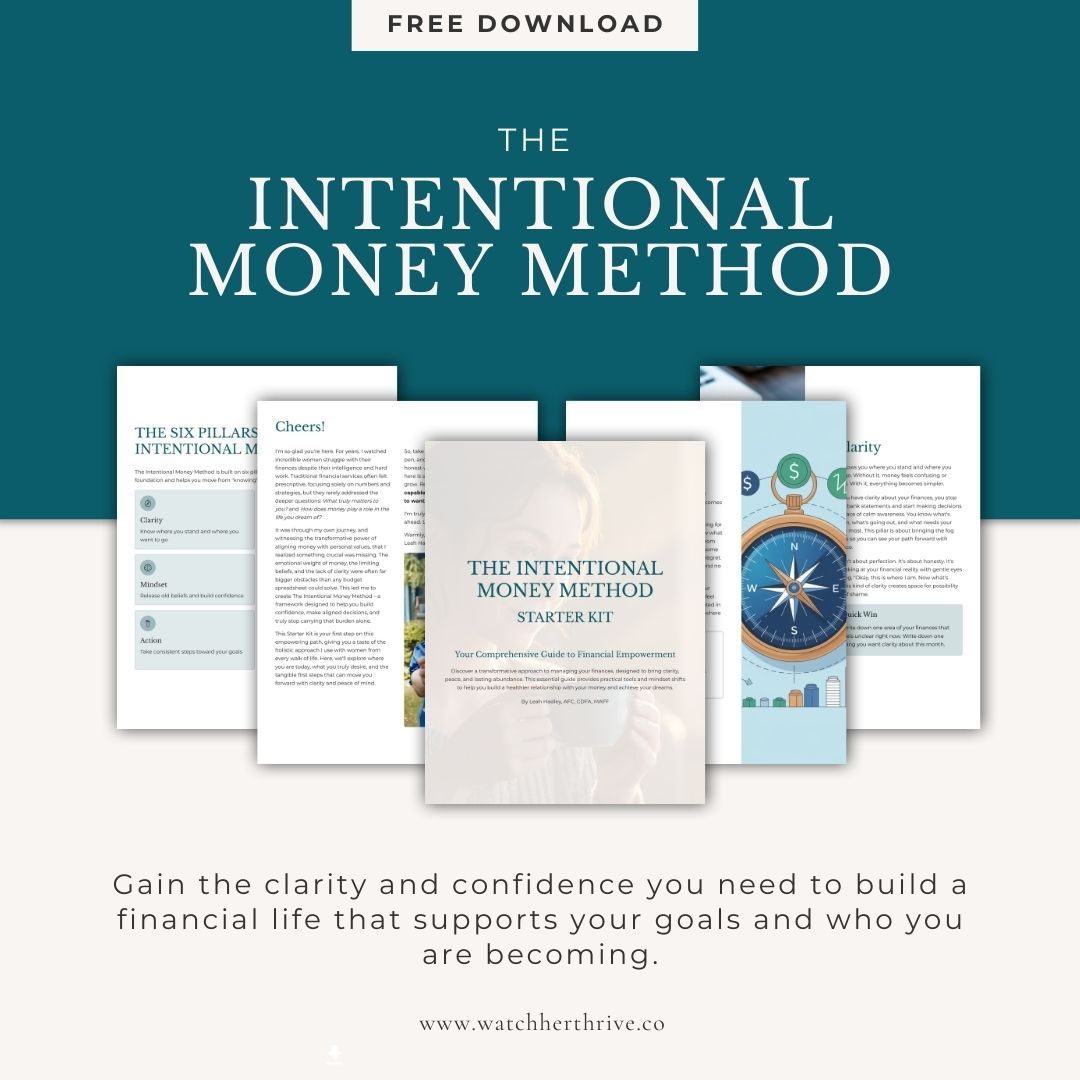
I talk about this a lot in my book, Intentional Money: The Modern Woman's Guide to Building Wealth, Purpose and Peace. The very first pillar of what I call the Intentional Money Method is Clarity. Not perfection. Not having everything figured out. Just the willingness to look.
Spring is the perfect time to look. First quarter is done. Taxes are hopefully filed. And there are still nine months left in the year to make meaningful progress toward your goals.
So let's do this together. Here is your step-by-step sprin...
The Best Board Games That Teach Kids About Money

No kid wants to sit down for a lecture about budgeting. And honestly, no parent really wants to give one.
But games? Games are different. When kids are playing, their guard is down. They are making decisions, dealing with consequences, navigating wins and losses, and absorbing concepts without realizing it is happening. That is exactly why I love using board games as a financial literacy tool.
I have been a financial planner for nearly two decades, and one thing I believe deeply is that the money habits and beliefs our kids develop start early. The conversations that happen around a game board, about why they ran out of money, about whether to spend or save, about what it means to owe someone else, are some of the most natural and effective financial education you can give.
These are the games we actually play in our house, along with what each one teaches.

Board Games for Teaching Kids About Money
The classic for a reason. Monopoly covers an impressive range of financ...
Financial Resolutions That Actually Stick: A Smarter Approach to Your Money Goals

Every January, millions of people write down the same financial goals they wrote down the year before. Save more. Spend less. Get out of debt. Pay off the credit cards.
And by February, most of those goals are sitting in a drawer somewhere, forgotten.
Here is what I have learned after nearly two decades of working with women on their finances: financial resolutions do not fail because people lack discipline. They fail because they are built on shame, vague intentions, and someone else's idea of what financial success should look like.
This year, I want to offer you a different approach.
Why Most Financial Resolutions Do Not Work
The traditional advice around financial goal-setting tends to focus almost entirely on tactics: automate your savings, cut your spending, track every dollar. And while those things have their place, they skip the most important step entirely.
They never ask you why.
Why do you want to save more? What would financial security actually make possible in you...
How to Create a Budget That Actually Works: A Simple Guide for Women

A budget is one of the most powerful tools you have for your financial life. Not because it restricts you, but because it gives you clarity. When you know where your money is going, you can make intentional decisions about where it goes next.
If you have tried budgeting before and it has not stuck, I want to gently offer this: the problem usually is not you. It is the budget. Most budgets are built around rules and restrictions rather than around your actual life, your values, and the goals that matter to you. When a budget does not reflect reality, it falls apart. When it does, it becomes one of the most grounding things you can do for yourself financially.
Here is how to build one that works..
Step 1: Set Up Your Budget Framework
Before you fill in any numbers, you need a structure to put them in. This is your budget framework, and it is simply a template that organizes your income, your expenses, your savings, and your goals in one place.
Your framework can be a spreadsheet, a ...
Holiday Entertaining on a Budget: How to Host Without the Financial Hangover

The holidays are one of my favorite times of year. The gatherings, the food, the people around the table. I love all of it.
What I do not love is the financial hangover that follows when hosting was not planned with intention. You know the one. You open your credit card statement in January and feel that sinking realization that the party cost twice what you expected.
It does not have to go that way.
Hosting with intention is one of the most practical applications of the Intentional Money Method. Before you plan a single menu or send a single invitation, the question to ask yourself is: what do I actually value about this gathering? Because when your spending is rooted in your values, it stops feeling like deprivation and starts feeling like clarity.
Most of us value the people, the warmth, and the connection. Not the elaborate spread or the coordinated tablescape. Getting clear on that first makes every decision that follows easier.
Here are the strategies I recommend for hosting...
Questions to Ask a Financial Advisor: Your Complete Meeting Checklist

Walking into a financial advisor meeting without knowing what to ask puts you at a disadvantage before the conversation even starts.
I have been on both sides of that table. As a financial planner, I have sat across from hundreds of women and guided them through the process of understanding their finances. And as someone who came up through the industry, I have seen what happens when advisors lead those conversations entirely on their own terms.
Here is what I want you to know: you are not there to be managed. You are there to be served. That means you should be asking as many questions as the advisor is.
This post gives you the complete checklist for every stage of the advisor relationship, from your very first meeting through your annual reviews. Print it. Save it. Bring it with you.
If you have not yet found an advisor and are still in the selection process, start with this guide on how to choose a financial advisor before you use this checklist.
Before Your Fir
...How to Choose a Financial Advisor: What Women in Midlife Need to Know

I have been a financial advisor for nearly two decades. I have worked inside large institutions and built my own firm. And I can tell you with complete honesty that not all financial advisors are created equal.
Some are excellent. Some are mediocre. And some are genuinely not working in your interest, even if they seem confident and credentialed.
I say that not to scare you away from getting professional help. Quite the opposite. A good financial advisor is one of the most valuable relationships you can have, especially in midlife when the decisions you make now have real consequences for the next 20 or 30 years. I say it because I want you to know what to look for, what questions to ask, and what should give you pause.
Here is how to choose a financial advisor who is actually right for you.

Start With Clarity on What You Actually Need
Before you talk to a single advisor, get clear on what you are looking for. This is the Clarity pillar of the Intentional...
Returning to Work After a Career Gap: What Women in Midlife Need to Know

Returning to work after time away from your career is one of the most significant financial transitions a woman can face. And it almost never happens in a vacuum.
Maybe you stepped back to raise children and are now re-entering after a divorce. Maybe your kids have launched and you are ready to rebuild professionally. Maybe a relationship ended and your financial independence is no longer optional. It is urgent.
Whatever brought you here, I want to start by saying something I mean: the time you spent away from traditional employment was not wasted. You built skills. You managed complexity. You made decisions under pressure with real consequences for real people. That counts. And in many ways, it has prepared you for exactly the kind of intentional, values-driven professional life that is possible on the other side of this transition.
The fear is real. So is the opportunity. Here is how to navigate both.
Start With Clarity Before You Start With Resumes
The instinct when returning t...

Leah Hadley, AFC, CDFA, MAFF
Leah Hadley, AFC® CDFA® MAFF™, is a bestselling author and financial planner with over 20 years of experience helping women build wealth with intention. She is the founder of Watch Her Thrive and Intentional Wealth Partners, and the author of Intentional Money: The Modern Woman's Guide to Building Wealth, Purpose & Peace.

Amazon Affiliate Disclosure
Watch Her Thrive is a participant in the Amazon Services LLC Associates Program, an affiliate advertising program designed to provide a means for sites to earn advertising fees by advertising and linking to amazon.com.
Investment Advisory Disclosure:
Leah Hadley is a Licensed Investment Adviser Representative and the Founder of Intentional Wealth Partners, a Registered Investment Adviser. Advisory services are offered exclusively through Intentional Wealth Partners.
Watch Her Thrive is not a Registered Investment Adviser and does not provide individualized investment advice, financial planning, or securities recommendations. All content provided through Watch Her Thrive is for educational and informational purposes only.