
Charting Your Course: Retirement Planning for Women in Their 50s

Navigating the complex waters of retirement planning for women can often feel overwhelming and daunting, particularly after experiencing significant life events such as a job loss or divorce. However, it's important to recognize that entering this phase also presents an empowering opportunity to reshape and refocus on a future that is tailored specifically to your needs and aspirations.
As many individuals begin to give retirement planning the gravitas it deserves in their 50s, it becomes increasingly indispensable for single women to approach this phase with both strategy and intention. This comprehensive guide is designed to provide you with invaluable insights, practical steps, and expert advice needed to instill confidence in your journey to a secure retirement. By equipping yourself with the right knowledge and tools, you can navigate the intricacies of retirement planning with ease, ensuring a secure and fulfilling future ahead.
A Guide to Retirement Planning for Women in Their...
How to Financially Prepare Your College-Bound Young Adult (Before They Leave Home)

If you have a college-bound young adult at home right now, I want to talk to you about something that probably isn't on your back-to-school checklist. It might matter more than the extra-long twin sheets.
Money.
Specifically: how to have an actual conversation about it before they walk out the door.
As a financial planner who has worked with women through some of the biggest money moments of their lives, I can tell you that the habits formed in those first years of independence tend to stick. The good ones and the not-so-good ones. And while you can't control every choice your kid makes once they're on campus, you absolutely can set them up with a foundation that will serve them for decades.
Here's how.
Start With Clarity: Know What You're Each Responsible For
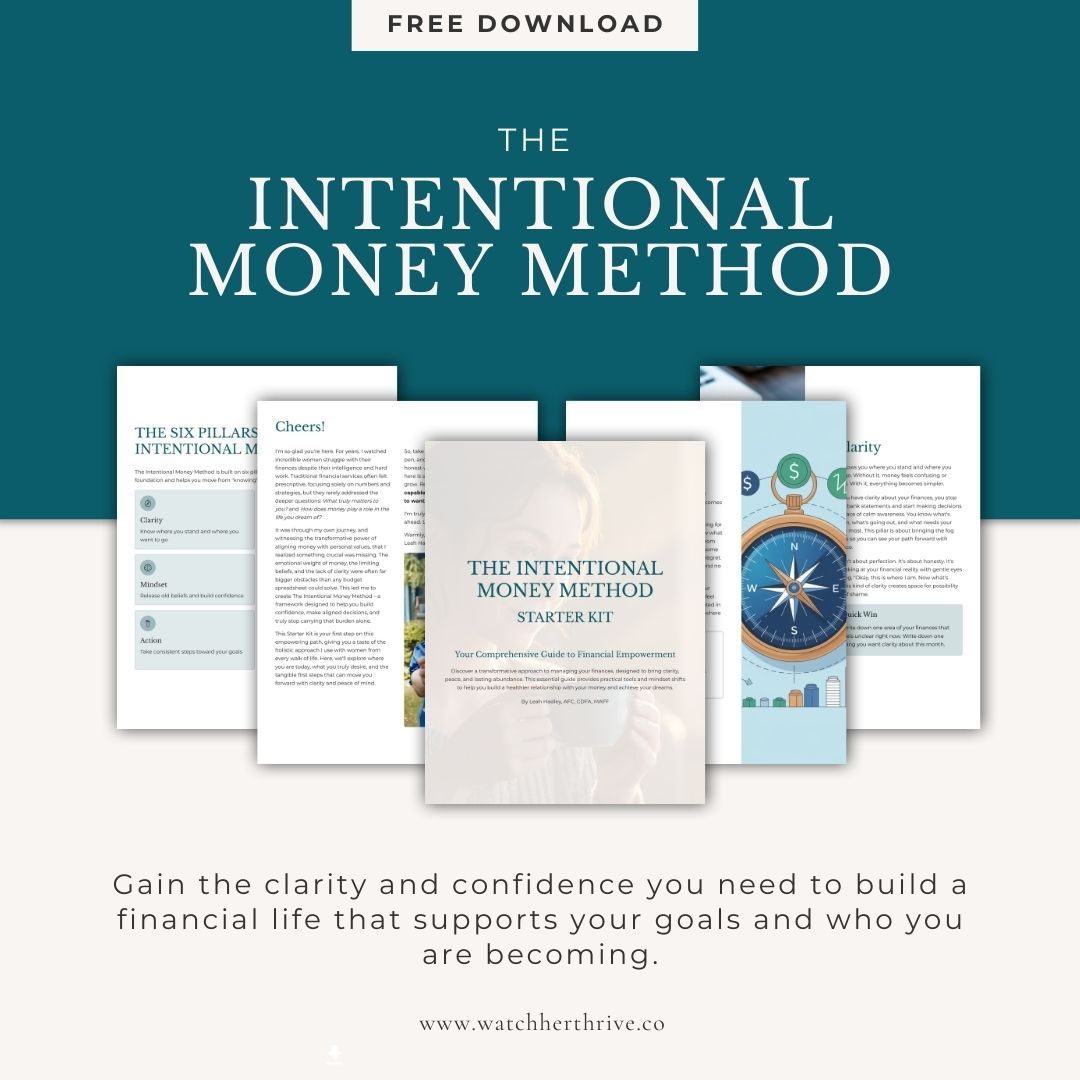
The first pillar of my Intentional Money Method is Clarity, and it applies beautifully here. Before any conversation about budgets or credit cards can go well, you and your young adult need to be crystal clear about the bas...
Financial Tips for Changing Careers: What to Do With Your Money Before, During, and After

I have been through this more than once.
I have been unexpectedly laid off. I have made a deliberate decision to walk away from a career path that was no longer right for me. And I have built a business from scratch without a guarantee of what the first year would look like financially.
Each time, the thing that made the difference was not courage or optimism, though those help. It was preparation. Having a financial plan that gave me enough runway to make the leap without free-falling.
A career change is one of the most significant financial transitions a woman can make, especially in midlife when the stakes are real and the margin for error feels smaller. But it is absolutely navigable. Here is how I think about it.
Start With Clarity Before You Start With Job Boards
Before you update your resume or start researching new fields, get honest about where you stand financially right now.
This is the Clarity pillar of the Intentional Money Method. You cannot plan a transition withou...
Navigating New Horizons: Planning for Retirement After Divorce

Divorce often leads to changes in every aspect of your life, especially your finances. It can be particularly daunting when you have to rethink and re-plan your retirement strategy. However, planning for retirement after a divorce doesn't need to be overwhelming. With the right approach, you can turn this life-altering experience into an opportunity to create a solid, customized retirement plan that works best for your new lifestyle.
Understanding the Impact of Divorce on Retirement
Divorce often results in splitting assets, including retirement funds, which may significantly reduce the amount you had planned to live on during retirement. It can also lead to increased living expenses, as you shift from shared costs to bearing them independently. Both of these changes can profoundly affect your original retirement plan.
Moreover, divorce can have various tax implications, like potential penalties for early withdrawal from retirement accounts or changes in tax filing status. These con...
Building Financial Confidence: How Women Can Develop a Stronger Money Mindset and Take Intentional Action

I remember the full range of emotions I felt when I bought my first house in 2007. Pride that I was doing something so significant. Worry that I was making the wrong decision. Excitement to finally have a place of my own. And overwhelming anxiety about all the new expenses and responsibilities ahead of me.
What I didn't realize at the time was that I was doing exactly what it takes to build financial confidence. I was taking intentional action, even in the face of fear.
Building financial confidence is a journey, not a destination. With each financial decision, we get an opportunity to flex our confidence muscles. Yet so many women shy away from these moments due to fear, self-doubt, or the belief that they don't know enough yet. What if the very act of making decisions, imperfect, uncertain, sometimes scary decisions, is exactly what builds the confidence we're waiting to feel?

Clarity and Values Come First
Before you can take confident financial action, you need two things: cla...
5 Essential Steps to Financial Independence for Women

Financial independence may seem like a lofty goal, but it's an attainable one. The key lies in breaking down the journey into manageable steps, and that's precisely what we're here to do. As women, we face unique financial challenges, but we also possess unique strengths to harness on our path to financial independence. In this blog post, we'll explore the five essential steps to financial independence for women and provide you with tools to take control of your financial future.
Step 1: Understanding Financial Independence
The first step in this journey is understanding what financial independence truly means. It's not just about having enough money to pay the bills. It's about having the financial stability to make choices that allow you to live on your terms. Financial independence is about being unchained from financial worries and empowered to make decisions that serve your best interests. Whether that means starting your own business, retiring early, or simply feeling secure in...
Budgeting for Women Over 50: Path to Financial Freedom

Do you ever feel like your money disappears without warning—or find yourself so afraid to spend that you can’t fully enjoy life?
If so, you’re not alone. Many women in midlife, especially after a major life change like divorce or retirement, struggle to find the right balance between saving and living.
The good news is that there’s a solution: creating a personalized budget plan.
A personalized budget isn’t about restriction—it’s about clarity, confidence, and control. It helps you understand your income, expenses, and priorities so your money supports the life you want to live.

Why a Budget Plan Is Your Financial Roadmap
Think of your budget as your personal roadmap to financial freedom.
It shows where your money is coming from, where it’s going, and how to use it in alignment with your goals.
Instead of feeling deprived, you’ll feel empowered to make intentional financial choices that reflect your values.
Let’s take a look at how one woman transformed her relationship with mo...
The Crucial Role of Support in Achieving Financial Independence for Women

Navigating the journey to financial independence is never really a solitary endeavor. The complexities of wealth growth strategies and emotional hurdles that often come with becoming financially independent necessitate a supportive system. This support can come in various forms, including financial advisors, mentors, peer groups, and educational resources. In this post, we explore support's multifaceted and crucial role in pursuing financial independence.
Guidance and Financial Independence
In the world of financial independence, guidance is key. The financial landscape can feel like a maze of rules, strategies, and options. A financial advisor or mentor can provide invaluable advice for those striving for financial independence. This guidance can help you avoid costly mistakes and make more informed decisions about your financial future.
Accountability on the Path to Financial Independence
Discipline and consistency are integral to achieving financial independence. Sharing your fi...
Mastering Risk Management: A Key to Long-Term Financial Success

Last week, we surveyed the attendees of our mastermind program to determine the areas of money management where they feel strongest and weakness. Risk management was an area of weakness for many of our attendees. When managing money, risk management is a crucial factor that shouldn't be overlooked.
Risk management refers to identifying, assessing, and mitigating potential risks that could negatively impact your financial situation. Effective risk management can help you protect your wealth and increase your chances of achieving your financial goals. In this blog post, we will explore the importance of risk management in money management.
Identifying Potential Risks
The first step in risk management is identifying potential risks. This involves analyzing various factors that could negatively impact your financial situation. Some common risks include market volatility, inflation, geopolitical events, and changes in tax laws. By identifying potential risks, you can take proactive measu...
How to Overcome Financial Setbacks Without Losing Your Wealth Mindset

Table of Contents
- The Setback Nobody Talks About
- Why Financial Setbacks Hit Women Differently
- What a Financial Setback Actually Looks Like (Real Examples)
- The Emotional Spiral: Why Your Mindset Takes the First Hit
- How to Start Over Financially Without Starting From Zero
- Rebuilding Financially: The Practical Steps That Actually Work
- What Financial Resilience Looks Like in Real Life
- The Role of Community in Recovering from a Financial Setback
- Frequently Asked Questions
The Setback Nobody Talks About
Here is something I have noticed in nearly two decades of working with women and their finances. The setback that derails people is rarely the one they saw coming.
It is the divorce they thought they could afford but could not. The job loss that happened eight months before retirement eligibility. The emergency fund that got used up for one emergency and then another before it could be rebuilt. The business that almost made it. The medical bill that showed up the same month...

Leah Hadley, AFC, CDFA, MAFF
Leah Hadley, AFC® CDFA® MAFF™, is a bestselling author and financial planner with over 20 years of experience helping women build wealth with intention. She is the founder of Watch Her Thrive and Intentional Wealth Partners, and the author of Intentional Money: The Modern Woman's Guide to Building Wealth, Purpose & Peace.

Amazon Affiliate Disclosure
Watch Her Thrive is a participant in the Amazon Services LLC Associates Program, an affiliate advertising program designed to provide a means for sites to earn advertising fees by advertising and linking to amazon.com.
Investment Advisory Disclosure:
Leah Hadley is a Licensed Investment Adviser Representative and the Founder of Intentional Wealth Partners, a Registered Investment Adviser. Advisory services are offered exclusively through Intentional Wealth Partners.
Watch Her Thrive is not a Registered Investment Adviser and does not provide individualized investment advice, financial planning, or securities recommendations. All content provided through Watch Her Thrive is for educational and informational purposes only.