
Scarcity vs. Abundance Mindset: What If We've Been Asking the Wrong Question?
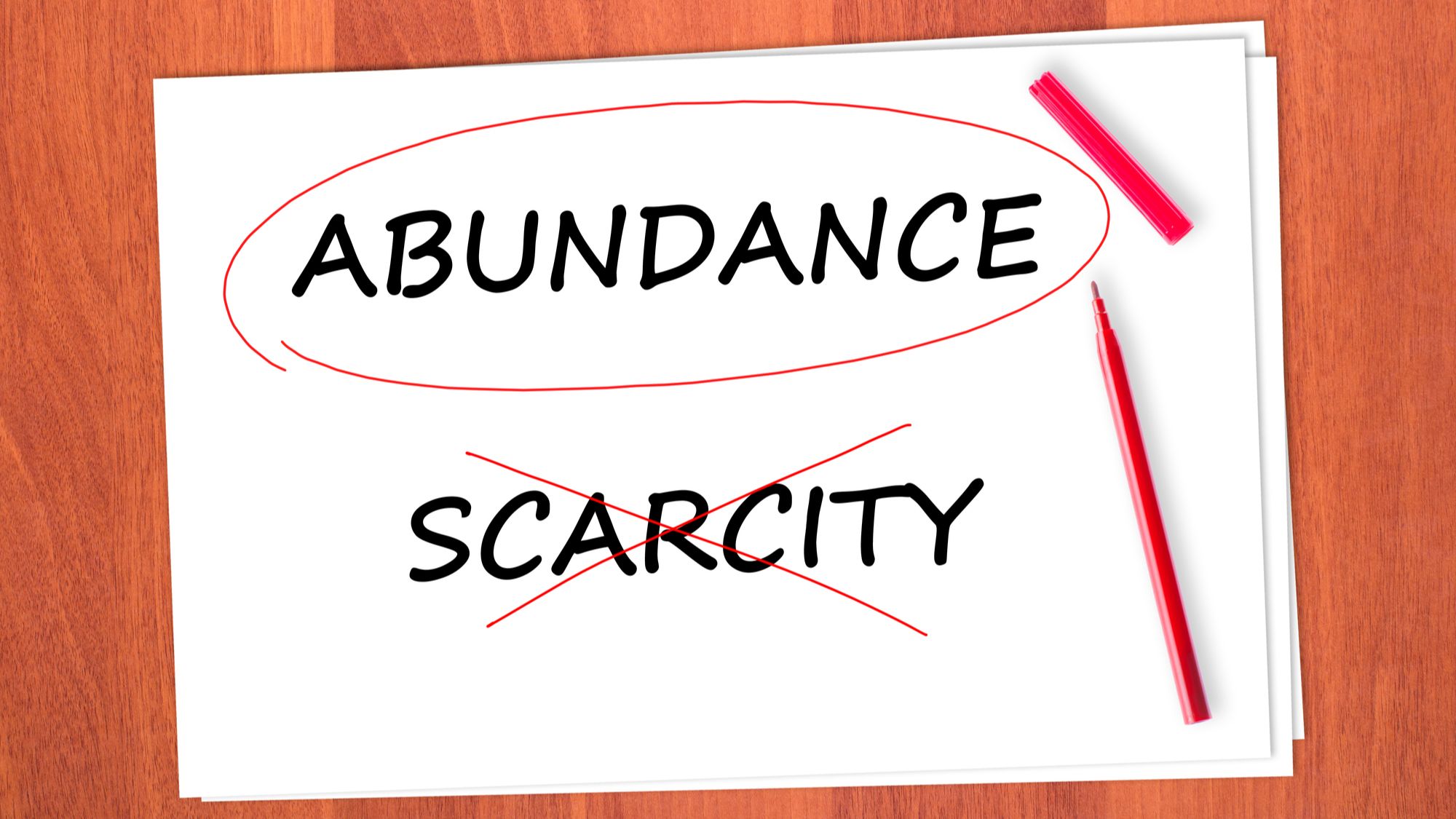
If you've spent any time in the personal development or financial wellness space, you've definitely heard about scarcity mindset versus abundance mindset. And the message is usually pretty clear: scarcity thinking is bad, abundance thinking is good. If you just shift your mindset to abundance, money will flow to you.
But what if this entire framework is completely missing the point?
As a financial planner who has worked with hundreds of women navigating major financial transitions, I've seen firsthand how the scarcity vs. abundance debate can actually harm people rather than help them. After years of watching clients struggle with shame around their "scarcity mindset," I'm ready to challenge this binary thinking.
The real question isn't whether you have a scarcity mindset or an abundance mindset. The real question is: Are you letting fear make your decisions?
Let me explain.

What Is Scarcity Mindset?
Scarcity mindset is the belief that there's never enough. Not enough money, not enough opportunities, not enough time, not enough resources. People operating from scarcity mindset tend to:
- Focus on what they lack rather than what they have
- Feel anxious about money even when they're financially stable
- Struggle to invest in themselves or their future
- Make decisions from a place of fear and protection
- Have difficulty celebrating others' success
The term "scarcity mindset" was popularized by Stephen Covey in The 7 Habits of Highly Effective People, and it's become a cornerstone concept in personal finance and wealth-building education.
What Is Abundance Mindset?
Abundance mindset, on the other hand, is the belief that there's plenty to go around. People with an abundance mindset:
- Focus on possibilities and opportunities
- Feel generous and willing to share resources
- Invest in growth and development
- Make decisions from confidence and optimism
- Celebrate others' wins without feeling threatened
In the financial coaching world, abundance mindset is often presented as the goal. It's the "evolved" way of thinking about money that successful people have supposedly mastered.
The Problem with the Scarcity vs. Abundance Framework
Here's where things get problematic: This binary framework oversimplifies human psychology and financial reality.
Scarcity Isn't Always a Mindset. Sometimes It's Math.
When someone tells you they can't afford something and you respond with "that's just scarcity thinking," you're not being helpful. You're being dismissive of their actual financial reality.
If you're a single parent with $47 in your checking account and rent due next week, scarcity isn't a mindset. It's a fact. Telling someone in genuine financial hardship to "think more abundantly" is, at best, unhelpful and, at worst, cruel.
Sometimes scarcity thinking is actually a rational response to living in a system that doesn't guarantee economic security.
Abundance Isn't Always Wisdom. Sometimes It's Privilege.
It's easy to "think abundantly" when you have:
- A safety net to fall back on
- Never had to choose between medication and groceries
- Financial mistakes that don't have devastating consequences
- Generational wealth or family support
- Job security and stable income
The ability to take financial risks, to invest in opportunities without knowing the outcome, to "trust that the money will show up"? These are often privileges, not just mindset shifts.

A Better Framework: Fear-Based vs. Clarity-Based Decisions
Instead of judging whether your thinking is "scarce" or "abundant," I want you to ask yourself: Am I making this decision from fear or from clarity?
This reframe changes everything.
Scarcity Thinking Can Be Wisdom OR Fear
Scarcity thinking from clarity looks like:
- "I'm going to build my emergency fund before I invest because that creates actual security for my situation"
- "I need to understand the terms of this contract before I sign"
- "I'm going to track my spending so I can make informed decisions"
- "This investment doesn't align with my risk tolerance right now"
Scarcity thinking from fear looks like:
- "I'll never have enough so I'm going to hoard every penny and never take any risks ever"
- "I can't invest in my business because what if it doesn't work"
- "Everyone is out to take advantage of me financially"
- "I don't deserve to spend money on myself"
See the difference? One is strategic financial planning. The other is paralysis.
Abundance Thinking Can Be Strategy OR Delusion
Abundance thinking from clarity looks like:
- "I'm going to invest in this opportunity because I've done the math and I have a plan if it doesn't work out"
- "I'm worth a higher salary and I'm going to negotiate for it"
- "There are multiple paths to my financial goals"
- "I can create value and generate income in creative ways"
Abundance thinking from fear looks like:
- "I'm going to ignore my debt and invest in this $10,000 program because I'm afraid of missing out and surely the money will show up somehow"
- "I don't need to look at my budget. The universe will provide"
- "Worrying about money is low vibration, so I just won't think about it"
- "If I just manifest hard enough, my financial problems will solve themselves"
One is empowered financial decision-making. The other is spiritual bypassing that can lead to very real financial consequences.
The Both/And Approach to Money Mindset
What if instead of trying to eliminate scarcity thinking and cultivate abundance thinking, we embraced both/and thinking?
- "I'm working with limited resources right now AND I'm capable of creating more"
- "I need to be strategic with what I have AND I believe opportunities exist"
- "This is my current reality AND it doesn't have to be my forever reality"
- "I acknowledge my constraints AND I refuse to let them define my future"
This approach allows you to:
- See your reality clearly without shame
- Plan strategically based on actual circumstances
- Remain open to possibility without denying facts
- Take intentional action that honors both current constraints and future goals
Practical Applications: Making Intentional Money Decisions
So how do you actually apply this in real life? Here are some scenarios:
Scenario 1: Investing in Professional Development
Fear-based scarcity: "I can't afford this course, and even if I could, it probably wouldn't work for me anyway. I should just keep doing what I'm doing."
Fear-based abundance: "I'm going to put this $5,000 course on a credit card I can't pay off because I'm claiming abundance and the ROI will definitely show up!"
Clarity-based decision: "This course costs $5,000. Do I have that in savings? If not, can I create a payment plan that doesn't put me in debt? What's the realistic ROI based on my current business model? Is this the best investment for where I am right now, or is there a better option?"
Scenario 2: Emergency Fund
Fear-based scarcity: "I need to save 2 years of expenses before I feel safe. I'll never travel or enjoy my life until I have total financial security."
Fear-based abundance: "Emergency funds are scarcity thinking. I'm going to invest everything and trust that money will be there when I need it."
Clarity-based decision: "Based on my situation (job stability, health, family responsibilities), 3-6 months of expenses in savings gives me the security I need to take strategic risks. Once I hit that target, I can redirect funds to investing and other goals."
Scenario 3: Career Transition
Fear-based scarcity: "I hate my job but the salary is good. I could never make this much doing something I love. I'm stuck here forever."
Fear-based abundance: "I'm quitting tomorrow to follow my passion! The universe will provide and I don't need a plan!"
Clarity-based decision: "I want to transition careers. What runway do I need financially to make this shift? Can I build skills or a side business while still employed? What's a realistic timeline that honors both my current security and my future goals?"

How to Develop Clarity-Based Money Thinking
1. Get Radically Honest About Your Financial Reality
Look at the numbers without judgment. What's actually in your accounts? What do you actually owe? What does your actual spending look like?
You can't make clarity-based decisions without accurate information.
2. Separate Facts from Feelings
Fact: "I have $2,000 in savings" Feeling: "I'm a failure because I should have more saved by now"
Work with the facts. Challenge the feelings that aren't serving you.
3. Ask Better Questions
Instead of "Is this scarcity thinking or abundance thinking?" ask:
- "What am I afraid of in this situation?"
- "What do I know to be true?"
- "What assumptions am I making?"
- "What would a strategic decision look like here?"
- "Am I avoiding something I need to face?"
4. Build Both Security AND Growth
You don't have to choose between safety and expansion. Create financial systems that honor both:
- Emergency fund AND investment account
- Debt payoff plan AND business investment
- Careful spending tracking AND guilt-free fun money
5. Get Support
Making intentional money decisions is hard to do alone. Whether it's a financial planner, a money coach, or a community of people working on similar goals, support makes clarity easier to access.

The Goal Is Intentionality, Not Abundance
Here's what I want you to take away from this:
Stop trying to eliminate scarcity thinking. Stop shaming yourself for not being "abundant" enough.
The goal isn't to have perfect thoughts about money. The goal is to make intentional decisions based on:
- Your current reality (not denial, not catastrophizing)
- Your values (what actually matters to you)
- Your goals (where you want to go)
- Strategic thinking (how to get there)
Some of your most financially sound decisions might look like "scarcity thinking" to someone else. And that's okay.
Some of your boldest, most transformative decisions might look like "reckless abundance thinking" to someone else. And that's okay too.
What matters is that YOU know why you're making the choice. That you've considered the risks and the opportunities. That you're moving forward with eyes wide open.
That's not scarcity thinking. That's not abundance thinking.
That's intentional thinking.
And it's the only kind of thinking that actually builds lasting wealth.
The Bottom Line
The next time someone tells you that you have a "scarcity mindset" because you're being thoughtful about a financial decision, remember this: There's nothing scarce about being strategic.
And the next time someone tells you to "just think abundantly" when you're facing real financial constraints, remember this: There's nothing abundant about ignoring reality.
Your financial wellbeing doesn't depend on having the "right" mindset. It depends on making decisions from clarity instead of fear, every single day.
Look, I'm not saying mindset doesn't matter. It absolutely does. But the conversation we're having about scarcity versus abundance is too simplistic. It's creating shame where there should be strategy. It's promoting toxic positivity where there should be honest assessment.
We need both. We need to acknowledge our reality AND believe that change is possible. We need to be smart with what we have AND stay open to what could be.
That's the work. Not eliminating one way of thinking in favor of another, but learning to make decisions from a place of clarity rather than fear.
That's what builds wealth. That's what creates security. That's what makes transformation possible.
So stop asking yourself if you're being scarce or abundant. Start asking yourself if you're being intentional.
The rest will follow.
Ready to make more intentional money decisions? Join The Empowered Sisterhood for coaching, community, and the support you need to build real financial confidence.
Frequently Asked Questions
Q: What is scarcity mindset?
A: Scarcity mindset is the belief that there's never enough money, opportunities, time, or resources. People with scarcity mindset tend to focus on what they lack, feel anxious about money even when financially stable, and make decisions from fear rather than strategy. However, it's important to understand that scarcity thinking isn't always bad. Sometimes it's a realistic assessment of financial constraints rather than a mindset problem.
Q: What is abundance mindset?
A: Abundance mindset is the belief that there's plenty to go around. People with abundance mindset focus on possibilities and opportunities, feel confident making investments in themselves, and celebrate others' success. While abundance mindset is often promoted as the "goal" in personal finance, it can become problematic when it leads to ignoring real financial constraints or making reckless decisions.
Q: Is scarcity mindset always bad?
A: No, scarcity mindset is not always bad. In fact, what looks like "scarcity thinking" can actually be wise financial planning. Being cautious about spending, building an emergency fund before investing, or carefully evaluating a financial opportunity aren't character flaws. They're strategic decisions. The problem isn't scarcity thinking itself. It's when scarcity thinking becomes fear-based paralysis that prevents you from taking any action, even when opportunities align with your goals.
Q: How do I develop abundance mindset?
A: Instead of trying to "develop abundance mindset," focus on making clarity-based decisions rather than fear-based ones. This means: (1) Get honest about your current financial reality without shame, (2) Separate facts from feelings about money, (3) Ask strategic questions about decisions rather than judging them as "scarce" or "abundant," (4) Build systems that honor both security and growth, and (5) Get support from professionals or community. The goal isn't to think abundantly. It's to think intentionally.
Q: What's the difference between fear-based and clarity-based thinking?
A: Fear-based thinking makes decisions to avoid discomfort, whether that's the fear of scarcity (hoarding money and refusing all risk) or the fear of missing out (ignoring real constraints to chase opportunities). Clarity-based thinking makes decisions based on your actual financial reality, your values, and strategic planning. For example, building an emergency fund before investing is clarity-based planning, while refusing to ever invest because "what if something bad happens" is fear-based paralysis.
Q: Can I have both scarcity and abundance mindset?
A: Yes, and you should! The healthiest approach to money is "both/and thinking" rather than trying to eliminate one mindset in favor of the other. This looks like: "I'm working with limited resources right now AND I'm capable of creating more," or "I need to be strategic with what I have AND I believe opportunities exist." You need both realistic assessment of constraints and openness to possibility. That's what intentional money management looks like.
Q: Why do financial coaches say scarcity mindset is holding me back?
A: Many financial coaches and personal development teachers have oversimplified the scarcity vs. abundance framework. While mindset absolutely matters, labeling all cautious financial behavior as "scarcity mindset" can be dismissive of real financial constraints and create shame around strategic planning. The question isn't whether you're thinking abundantly enough. It's whether you're making decisions from clarity or from fear. Sometimes what looks like scarcity thinking is actually financial wisdom.
Q: How do I know if I'm being strategic or just afraid?
A: Ask yourself these questions: (1) Am I making this decision based on actual facts about my situation or on worst-case scenarios I'm imagining? (2) Have I considered both the risks AND the opportunities? (3) Does this decision align with my values and long-term goals? (4) Am I avoiding something I need to face? (5) If fear wasn't a factor, would I make a different choice? Strategic thinking acknowledges risks while still moving forward. Fear-based thinking uses risks as a reason to avoid all action.
Other blog posts related blog posts:
The Crucial Role of Support in Achieving Financial Independence
5 Essential Steps to Financial Independence for Women
Don't Let a Financial Setback Ruin Your Mindset
Developing a Gratitude Mindset to Grow Personally & Professionally
Free: Intentional Investing for Women
My 24 page guide to aligning your portfolio with your goals. If investing has always felt like a language other people speak, start here.

Leah Hadley, AFC, CDFA, MAFF
Leah Hadley, AFC® CDFA® MAFF™, is a bestselling author and financial planner with over 20 years of experience helping women build wealth with intention. She is the founder of Watch Her Thrive and Intentional Wealth Partners, and the author of Intentional Money: The Modern Woman's Guide to Building Wealth, Purpose & Peace.

Amazon Affiliate Disclosure
Watch Her Thrive is a participant in the Amazon Services LLC Associates Program, an affiliate advertising program designed to provide a means for sites to earn advertising fees by advertising and linking to amazon.com.
Investment Advisory Disclosure:
Leah Hadley is a Licensed Investment Adviser Representative and the Founder of Intentional Wealth Partners, a Registered Investment Adviser. Advisory services are offered exclusively through Intentional Wealth Partners.
Watch Her Thrive is not a Registered Investment Adviser and does not provide individualized investment advice, financial planning, or securities recommendations. All content provided through Watch Her Thrive is for educational and informational purposes only.